Jewel Color Sort: Diamond Game
- 4.5
- Rating
- 1.00M
- Installs
- Free
- Price
 Analysis by App-foxy
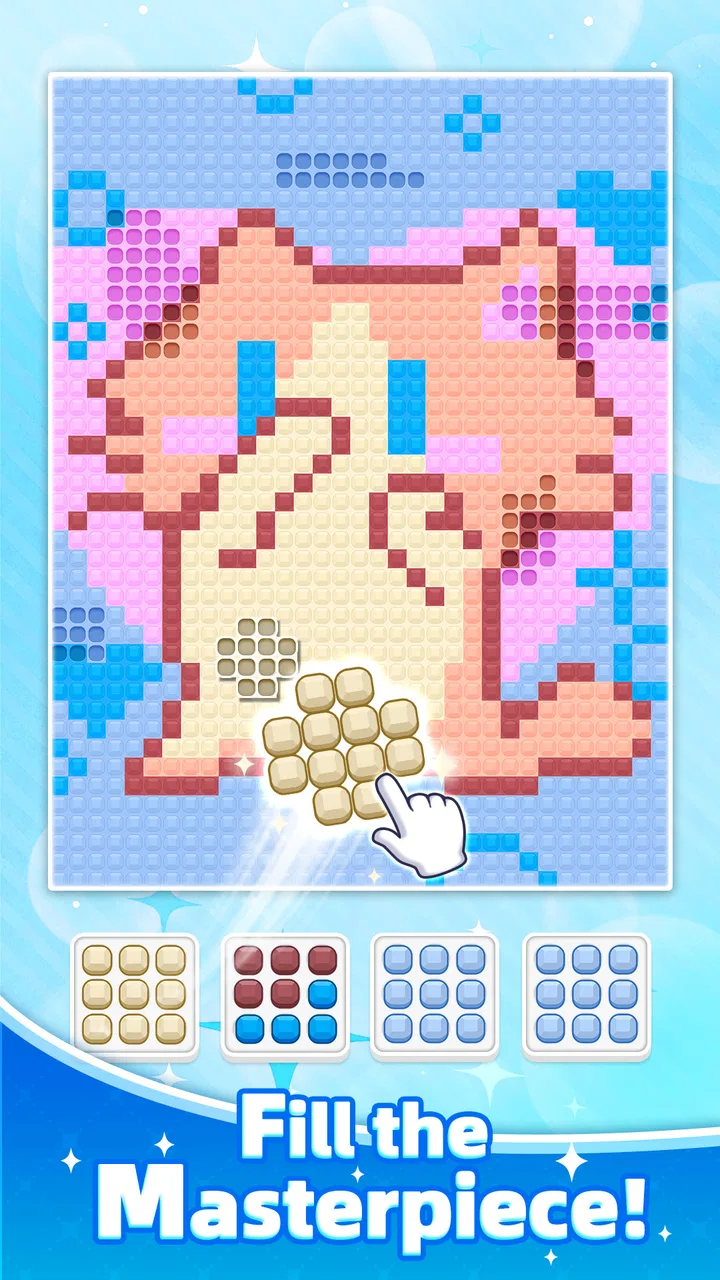
I spent time with Jewel Color Sort: Diamond Game as a casual puzzle game, and my first impression was clear: it is built for short, satisfying sessions rather than long, story-driven play. The main appeal comes from arranging colorful jewel pieces, working through diamond-sorting challenges, and completing art-focused puzzles that reward patience more than speed. It is easy to understand within a few moments, but the later decisions can still make me pause and plan instead of tapping randomly.
That makes it a comfortable choice for anyone who likes tidy, visual puzzles on Android. HappyTapLand has kept the concept approachable, and the game sits naturally between a color-sorting title and a relaxing art activity. I would recommend it to someone who wants something gentle for a commute, a waiting room, or a few minutes before bed. I would be less enthusiastic for players who need a deep campaign, competitive rankings, or a strong narrative reason to keep returning.
How the current version feels to play
The current release is version 2.2.1, and it presents itself as a polished casual puzzle experience rather than a complex strategy game. The basic loop is familiar: look at the available jewels, decide where each color belongs, and make moves that gradually turn a messy arrangement into a finished result. The art-puzzle side adds another layer of visual reward, so completing a stage feels more like restoring order than simply clearing a board.
You May Also Like

 Blood Strike: 2.5 Anniversary
Blood Strike’s Loadouts Turn Every Drop Into a Tactical Gamble
A close look at Blood Strike’s custom loadouts: how fast access to signature weapons reshapes its battle royale rhythm, rewards preparation, and narrows the gap between fights.

 Pandora - Music & Podcasts
Pandora’s Music Is Easy to Start, but Harder to Recover
Pandora’s strength is its low-effort path from a seed to a station. Its weak spot is how much confidence it asks you to place in connection, setup, and quiet recovery.

 8 Ball Pool
 Is Built on Rivalries, Rematches, and Routine
A close look at the rivalries, rematches, shared routines, and unanswered safety questions that turn a quick pool match into a persistent mobile community.

 Samsung Music
’s Quiet Strength Is Playing What You Already Own
Its reach comes less from spectacle than from dependable access to a personal library. That simplicity is both the app’s strongest retention engine and its ceiling.

 AccuWeather: Weather Radar
AccuWeather Review: A Quick, Clear Forecast for Everyday Decisions
For everyday plans, the best forecast is the one you can understand quickly. AccuWeather makes rain timing, radar, and local conditions easy to act on, with a few trade-offs.

 Hill Climb Racing
Why Hill Climb Racing Still Turns Crashes Into One More Run
A tiny car, a bumpy hill and one more upgrade: Hill Climb Racing keeps resurfacing because its simple chaos makes every near-miss feel personal.
More From Our News Desk



I found the strongest part of the experience to be its low barrier to entry. You do not need to memorize complicated rules, learn a fictional world, or commit to a long session. The game is suitable for Everyone, and that rating matches the friendly presentation and nonviolent puzzle focus. It can work for younger players who enjoy colors and sorting, although adults may appreciate it most as a simple way to switch off mentally.
The free entry point is helpful because it lets you test the central loop without committing money first. There are in-app purchases ranging from $1.99 to $99.99 per item, so I would advise checking the purchase prompts carefully, especially if the device is shared with a child. The existence of optional spending does not ruin the basic idea, but it does mean the game deserves the same purchase awareness as other free-to-play puzzle titles.
What makes the sorting satisfying
Color sorting works because every move has an immediate visual consequence. When I place a jewel correctly, the board looks a little cleaner, and that small change encourages me to continue. This is different from a traditional match-three game, where the pleasure often comes from chain reactions and surprise combinations. Here, the satisfaction is more deliberate: I am trying to create a correct arrangement and avoid blocking the moves I will need later.
My most useful approach was to avoid filling the first available space automatically. I looked for colors that were close to completion and considered whether moving one group would trap another. That habit matters in sorting puzzles because an apparently helpful move can reduce flexibility. Players who treat every tap as permanent progress may find themselves restarting mentally, while players who preserve open options tend to solve boards more comfortably.
The jewel theme also gives the game a softer feel than a plain logic grid. The pieces are easier to read at a glance, and the visual goal helps break up the concentration required by the sorting rules. I would not call it a demanding brain-training tool, but it does encourage planning, visual grouping, and careful sequencing in a way that feels lighter than formal logic exercises.
The art-puzzle side adds variety
The art-oriented stages are important because they prevent the experience from feeling like one repeated container puzzle. Instead of focusing only on the next legal move, I also get the sense of working toward a finished image. That broader visual goal gives slower players a reason to continue even when a particular sorting arrangement becomes frustrating.
This is one of the game’s less obvious strengths: the reward is not limited to solving a problem. The completed artwork provides a calmer endpoint, which suits players who enjoy coloring or decorative puzzle games. If you normally find abstract sorting boards too dry, the art presentation may make the same kind of thinking easier to stick with.
At the same time, players should not approach it expecting a full digital coloring studio or a detailed creative tool. Its focus remains puzzle completion. I see the artwork as motivation and atmosphere rather than a replacement for an app designed specifically around freeform drawing, shading, or personal design.
Development, version context, and everyday use
HappyTapLand’s game has reached version 2.2.1, which is the release I would judge when deciding whether to install it today. That version number suggests an established product rather than a first experiment, but I would separate that observation from any assumption about future updates. A current version can tell me what is available now; it cannot promise how quickly new content or refinements will arrive.
The game was released on April 10, 2026, and supports Android 6.0 or later. That broad operating-system requirement makes it accessible on many older Android devices, which is useful for people who keep a reliable phone for casual gaming instead of upgrading frequently. Performance can still depend on the individual device and its available storage or background activity, but the stated minimum makes the game less demanding from a compatibility perspective than newer titles that require a recent system.
Its audience is already substantial, with over one million installs and an average rating of 4.5 from around thirty-five thousand ratings. I treat that as a useful sign that the core idea connects with many players, not as proof that every person will enjoy it. Puzzle preferences are personal: someone who likes calm sorting may find it immediately appealing, while someone who wants constant novelty may find the pace too measured.
A realistic use case is a ten-minute wait at a clinic or station. I could open a stage, make a few careful moves, and stop without losing the whole value of the session. The game does not demand the kind of attention that a competitive action title requires, so it fits moments when I want to be occupied but still remain aware of what is happening around me. I would not use it while walking or doing anything that needs full attention, but it suits a seated break well.
A practical routine for solving harder boards
When a board becomes less obvious, I recommend beginning with the colors that have the fewest available destinations. They are usually the easiest groups to accidentally block. I then check whether a nearly complete stack can be finished without consuming a space needed by a different color. This two-step scan is more reliable than simply following the most visually attractive move.
Another useful habit is to pause after a small sequence rather than tapping through several moves quickly. The board may look similar, but the available space has changed, and that can alter the best plan. This is where the game becomes more thoughtful than its relaxed presentation suggests. The challenge is not reaction time; it is preserving enough room to recover from an imperfect decision.
I also found that the art goal can be used as a pacing tool. If I was getting impatient with a difficult arrangement, I treated the stage as a gradual image-building exercise instead of a test I had to finish immediately. That shift reduced the temptation to make careless moves. It is a small psychological trick, but it makes the game more pleasant during longer sessions.
Who will enjoy it most
This is a good match for casual puzzle players who like visual order, color grouping, and a gentle sense of completion. It can also suit people who want a screen activity that is more engaging than scrolling but less intense than an action game. Families may find the Everyone rating reassuring, though I would still keep the payment settings in mind because the game is free to start and includes optional purchases.
I would especially point it toward players who enjoy switching between a clear mechanical task and a decorative result. The combination gives the game a slightly warmer personality than a bare sorting utility. If you like finishing small goals and seeing a board become cleaner, the design should feel natural rather than demanding.
There are also clear reasons to skip it. Players looking for a substantial story, character development, online competition, or advanced strategy may run out of reasons to continue. The game’s appeal depends on enjoying repetition with gradual variation. If sorting colored jewels already sounds tedious, the art presentation may not be enough to change your mind.
How it compares with familiar puzzle alternatives
Compared with match-three games, this title is less about speed, combos, and unexpected cascades. I get more control over the outcome, but also more responsibility for planning. That makes it calmer and sometimes more mentally deliberate, although it may feel less exciting when I want a burst of action.
Compared with traditional coloring apps, it offers more structure and a clearer problem-solving element. I am not simply choosing colors for an open canvas; I am earning progress through a puzzle sequence. That is a strength for people who need a goal, but a limitation for anyone who wants unrestricted creative expression.
Compared with minimalist logic games, the jewel theme and art rewards make the experience more inviting. The trade-off is that players who prefer pure deduction may see the visual layer as decoration rather than meaningful depth. In my view, the best alternative depends on the mood: choose this game for orderly, relaxing progress; choose a competitive puzzle for urgency; choose a coloring tool for creative freedom; choose a logic specialist for harder abstract reasoning.
Remaining friction and what I would watch next
The main limitation is the possibility of repetition. Sorting puzzles can be soothing, but the same basic action may lose its charm if the visual goals do not provide enough variety over time. I would want future development to keep the stages feeling meaningfully different instead of relying only on new arrangements of familiar colors.
The purchase range also deserves attention from budget-conscious players. Because the game is free, it is easy to begin casually, but the presence of higher-priced individual items means I would not hand over an unrestricted device to a child. My practical advice is simple: play the free portion first, decide whether the core loop is genuinely enjoyable, and treat any purchase as optional rather than necessary for evaluating the game.
I would also watch how HappyTapLand handles the product after version 2.2.1. New puzzle ideas, better variety, and thoughtful refinements would strengthen the long-term case. I would be cautious about expecting major changes simply because the version number advances. For now, the sensible judgment is based on the current experience: it is a friendly, accessible puzzle game with a clear identity, not a promise of a constantly expanding platform.
Another point to consider is session length. The game works particularly well in short bursts, but that can be either an advantage or a weakness. I like being able to stop after a small amount of progress, yet players who want a large, continuous adventure may feel that the experience lacks momentum. Its design is best understood as a collection of small mental breaks rather than one long journey.
After using it, I would describe Jewel Color Sort: Diamond Game as a dependable choice for relaxed color-sorting and art-puzzle sessions. Its free availability, Everyone rating, support for Android 6.0 and later, and accessible rules make it easy to recommend to the right audience. The strongest reason to try it is the balance between orderly jewel placement and the satisfaction of completing visual artwork.
My final recommendation is conditional but positive. Install it if you want a calm puzzle you can pick up and put down, and if you enjoy planning without a timer-driven atmosphere. Skip it if you need deep progression, competitive pressure, or fully open-ended creativity. For me, its best quality is that it turns a simple sorting idea into a pleasant everyday ritual, provided I accept the repetition and keep the optional spending under control.
FAQs for Jewel Color Sort: Diamond Game
01What is Jewel Color Sort: Diamond Game?
Jewel Color Sort: Diamond Game is a casual puzzle game based on sorting colorful jewel pieces into matching containers or tubes. The objective is to organize every color correctly while following the available moves and spaces. Its simple rules make it easy to learn, but later stages usually require careful planning, patience, and sometimes thinking several moves ahead.
02How do you play Jewel Color Sort: Diamond Game?
To play, tap or drag a jewel stack to another container, generally placing it only where the same color is already present or where there is enough empty space. The goal is to separate all colors into completed groups. Before moving anything, check the order of the pieces and preserve empty containers whenever possible, since they are useful for temporarily rearranging difficult stacks.
03Is Jewel Color Sort: Diamond Game free to download and play?
The game can generally be downloaded for free on supported Android or iOS devices, although the exact availability may depend on your region and device. Free versions commonly include advertisements, and some editions may offer optional purchases for hints, extra moves, ad removal, or other conveniences. Review the store listing carefully before downloading to confirm current pricing and features.
04Does Jewel Color Sort: Diamond Game require an internet connection?
Basic sorting levels may be playable without a constant internet connection, which makes the game suitable for short sessions while traveling or when mobile data is unavailable. However, advertisements, cloud synchronization, updates, leaderboards, and in-app purchase verification may require internet access. Offline behavior can vary between versions, so test the game after installation if offline play is important to you.
05Is Jewel Color Sort: Diamond Game suitable for children and casual players?
The game is generally appropriate for casual players because it uses straightforward controls, colorful visuals, and puzzle mechanics that do not require fast reactions. It can also encourage concentration and logical thinking. Parents should still check the current age rating, advertising content, privacy policy, and purchase settings, especially if children will use the device without direct supervision.
Pros
- Relaxing sorting gameplay suitable for short or extended sessions.
- Bright jewel designs make completed levels visually satisfying.
- Simple controls are easy for new players to understand.
- Gradual difficulty provides a steady challenge without overwhelming beginners.
- Works well as a casual distraction during spare moments.
Cons
- Later puzzles can feel repetitive once the sorting pattern becomes familiar.
- Some levels may depend more on patience than strategic decision-making.
- Frequent rewards or prompts can interrupt the flow of play.
- Small jewel details may be harder to distinguish on compact screens.
- Progress may feel slow if optional boosts or hints are limited.

Jewel Color Sort: Diamond Game
Gallery